

Sun-Spot
Showing the single result
HT-200 Flameless Catalytic Infrared Heater
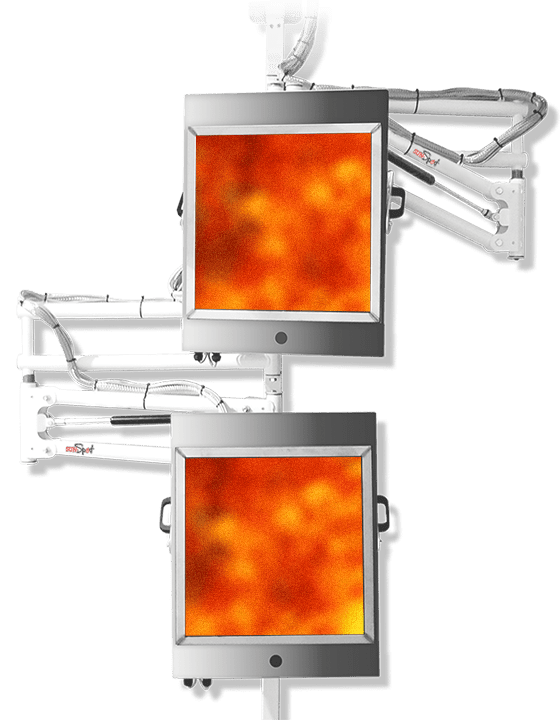
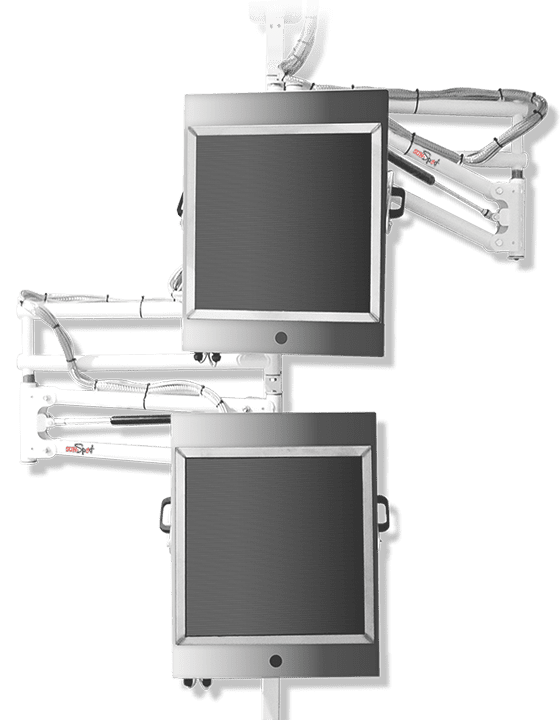
The HT-200 is engineered for demanding industrial finishing environments. Its two heating heads, precision controls and flameless catalytic infrared technology support fast, repeatable curing for wood, metal, automotive, composite and OEM production.
 HT-200Precision Heating System
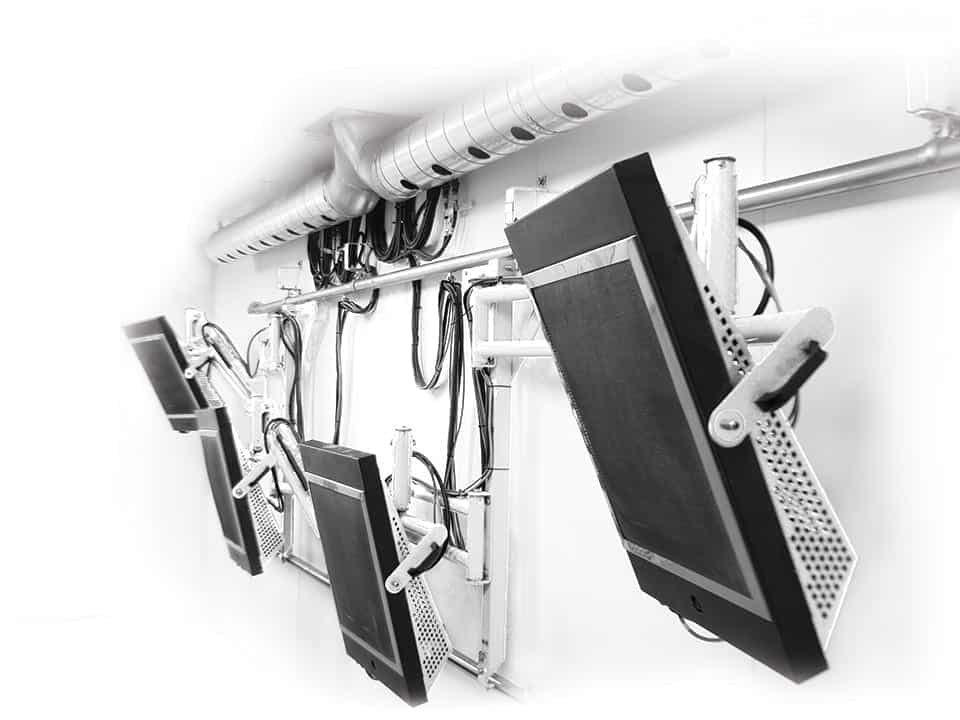
Select the image to compare the HT-200 while operating and powered off.
 HT-100Catalytic Infrared Heating System
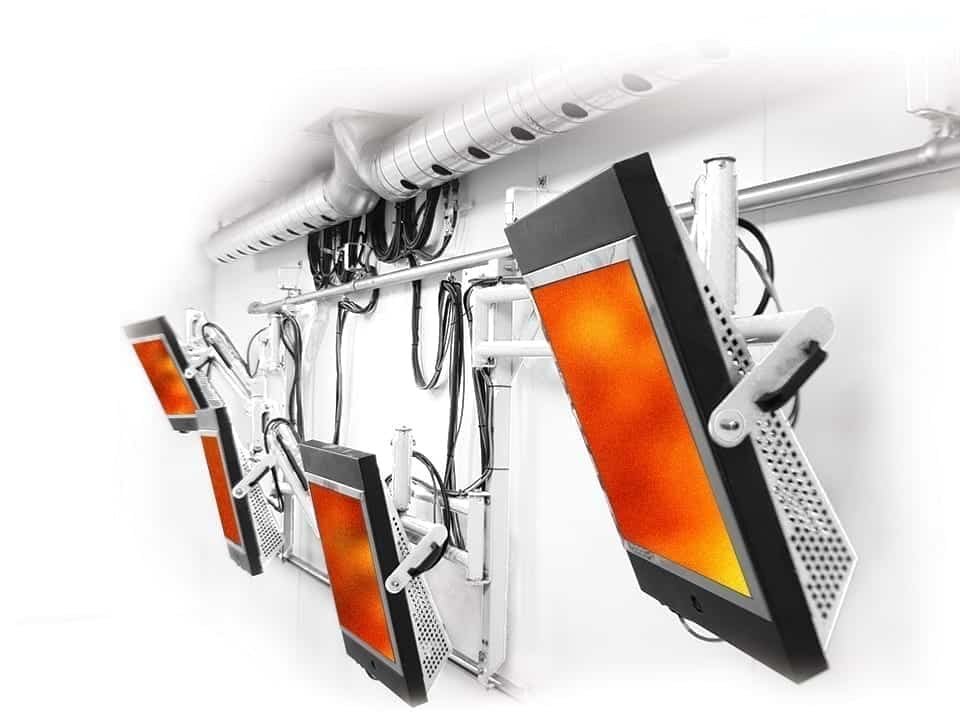
Select the image to compare the HT-100 while powered off and operating.
Sun-Spot HT-100 Catalytic Infrared Heater
The HT-100 is Sun-Spot's versatile single-head catalytic infrared curing system. It is designed for manufacturers that need fast, controlled curing in a compact and movable industrial heating system.
Using flameless catalytic combustion, the HT-100 produces medium-wave infrared energy that transfers directly to painted and coated surfaces. This helps shorten curing cycles, reduce unnecessary heating of the surrounding air and improve production consistency across wood, metal, automotive and general industrial finishing.
Sun-Spot at a glance
Sun-Spot catalytic infrared heaters are flameless, gas-fired paint drying and curing systems made in Joliette, Québec. They cure paint, primer, clear coat and wood finishes in 2 to 20 minutes on natural gas or propane. S&S Finishing Systems supplies the HT-100 and HT-200 across Canada.
| Manufacturer | Sun-Spot (also written Sunspot), part of Ayotte Techno Gaz Group Inc. |
|---|---|
| Made in | Joliette, Québec, Canada |
| Models | HT-100 (one heating head) and HT-200 (two heating heads) |
| Product type | Industrial paint drying and curing system (gas catalytic infrared heater) |
| Heating technology | Flameless catalytic combustion that produces medium-wave infrared |
| Fuel | Natural gas or propane |
| Fuel cost | Under $1 CAD per hour |
| Typical cure time | 2 to 20 minutes, depending on the coating |
| Temperature control | Built-in pyrometer, accurate to ±3°F (±1.6°C) |
| Emissions | Carbon dioxide and water vapour only, no carbon monoxide or NOx |
| Approvals | CSA (Canada and US) and CE; patented technology |
| Service life | Up to 20 years with minimal maintenance |
| Canadian supplier | S&S Finishing Systems, Wilmot, Ontario |
Figures for cost, cure time, emissions and service life come from Sun-Spot's product brochure.
How does a Sun-Spot catalytic heater work?
A Sun-Spot heater mixes natural gas or propane with fresh air across a catalyst pad. The catalyst makes the gas react below its ignition temperature, so it releases heat without a flame. That heat leaves the pad as medium-wave infrared, which the coating and the surface of the part absorb directly, instead of heating all the air in the booth.
- Gas and air enter the pad. Natural gas or propane mixes with fresh air inside the thermo heating pad.
- The catalyst reacts without a flame. The reaction runs below flame temperature, so there is no open flame in the shop.
- The pad emits medium-wave infrared. The radiant energy is aimed at the part, and a pyrometer reads the surface temperature.
- The coating absorbs the heat and cures. The only by-products are water vapour and carbon dioxide.
Because the heat goes into the coating rather than the air, there is very little air movement to stir up dust, and much less energy is wasted than in a hot-air convection oven.
Paint drying vs paint curing: what is the difference?
Drying is when the water or solvent evaporates (flash-off) and the film becomes dry to the touch. Curing is the chemical reaction, or cross-linking, that gives the coating its full hardness and chemical resistance. A finish can feel dry long before it is fully cured.
Controlled heat speeds up both stages. Sun-Spot says its heaters force moisture out of water-based films in about 2 to 3 minutes, then hold the surface at the cure temperature you set, so parts can be handled, sanded, stacked or packed sooner.
Heat makes paint dry and cure faster than cold, as long as you stay within the temperature range on the coating's technical data sheet. Cold, damp shops slow down both evaporation and curing.
HT-100 vs HT-200: which Sun-Spot model do you need?
The HT-100 has one heating head and suits smaller parts, spot repairs and flexible production. The HT-200 has two heads that cure twice the surface area, up to 4 × 8 ft, so it suits large panels, doors, cabinets and high-volume lines.
| Feature | HT-100 | HT-200 |
|---|---|---|
| Heating heads | 1 | 2 |
| Curing area | About 4 × 4 ft | Up to 4 × 8 ft |
| Infrared type | Medium-wave, flameless | Medium-wave, flameless |
| Fuel | Natural gas or propane | Natural gas or propane |
| Controls | Control panel with pyrometer: ramp time, cure temperature, cure time | Same, with a pyrometer on each head |
| Movement | Articulated arm, optional rail | Articulated arm, 60 in span, 180° rotation, optional rail |
| Best for | Flexible production, smaller parts | Large components, high-volume lines |
| Price | Request a quote | |
Not sure which one fits? Send us your largest part size, your coating and your daily volume and we will recommend a model.
How fast does a Sun-Spot heater cure paint and wood finishes?
Sun-Spot lists cure times of 2 to 20 minutes for common automotive, industrial and wood coatings, with typical cycles of 4 to 12 minutes. The manufacturer says its heaters dry up to 4 times faster than hot-air convection.
| Coating | Sun-Spot cure time |
|---|---|
| Automotive water-based coating | 2 min |
| 2K automotive primer | 8 min |
| Wood coating, pre-catalyzed (water or solvent) | 8 min |
| Wood coating, post-catalyzed (water or solvent) | 8 min |
| Automotive clear coat | 15 min |
| Industrial polyurethane | 15 min |
| Polyurethane varnish for wood | 20 min |
Manufacturer figures. Real cure times depend on coating chemistry, film thickness, substrate, part mass, and shop temperature and humidity. Always follow your coating's technical data sheet.
Sun-Spot vs curing ovens, booth bake cycles and infrared curing lamps
Shops usually choose between three ways to force-cure paint: a hot-air curing oven or spray booth bake cycle, electric infrared curing lamps, or a gas catalytic infrared system like Sun-Spot. Compared with a convection oven or bake cycle, a Sun-Spot heater cures faster and costs less to run because it heats the coating, not the air. Compared with electric short-wave infrared curing lamps, it runs on cheaper gas instead of electricity and covers a larger area.
| Factor | Sun-Spot catalytic infrared | Curing oven or booth bake (convection) | Electric infrared curing lamps (short-wave) |
|---|---|---|---|
| How it heats | Medium-wave infrared absorbed by the coating | Heats the air, which then heats the part | Infrared from electric lamps |
| Energy source | Natural gas or propane (electricity only for controls) | Gas burner or electric elements | Electricity |
| Running cost | Lowest: up to 80% less than convection and up to 60% less than short-wave infrared | Highest | Higher than Sun-Spot |
| Open flame | No | Burner in some ovens | No |
| Air movement and dust | Minimal | High | Minimal |
| Best for | Zone curing on production lines, large parts, adding cure capacity to an existing booth | Batch curing many parts at once | Small spot repairs |
Savings figures are Sun-Spot's published claims. Your savings depend on local gas and electricity rates and how the equipment is used.
What can Sun-Spot heaters cure?
Sun-Spot heaters cure water-based and solvent-based coatings on wood, metal, plastic, fibreglass and composites.
- Wood finish drying: lacquers, stains and pre-cat or post-cat finishes
- Kitchen cabinets, furniture, doors and windows
- Automotive paint curing: primers, base coats and clear coats
- Industrial polyurethane and paint on metal parts
- Plastic, fibreglass and composite parts
- Paints, inks and other organic coatings
Industries: woodworking and cabinetry, door and window manufacturing, automotive refinish and collision repair, aerospace, marine, metal fabrication and general industrial finishing.
Why buy Sun-Spot from S&S Finishing Systems
- Canadian distributor since 1977. S&S Finishing Systems has supplied industrial spray finishing equipment from Wilmot, Ontario, near Kitchener-Waterloo, for nearly 50 years.
- Help sizing the system. We match the model, number of heads and mounting to your parts, coatings and booth layout.
- Canadian-made equipment. Sun-Spot heaters are built in Québec, so the manufacturer and its support team are in Canada too.
- One supplier for the whole finishing line. Pair your heater with spray guns, pumps, pressure tanks and booth supplies from the brands we carry, or compare other curing equipment.
- Freight quoted for you. Heaters ship by freight, and we send you the shipping cost with your quote.
Get a Sun-Spot quote
Tell us your part size, coating and production volume. We will reply with pricing and freight.
Sun-Spot FAQ
What is a Sun-Spot catalytic infrared heater?
A Sun-Spot heater is a gas-fired heater that uses a catalyst to produce flameless, medium-wave infrared heat for drying and curing paint, primer, clear coat and wood finishes. It is designed and built in Joliette, Québec, by Sun-Spot, part of Ayotte Techno Gaz Group.
What is the difference between the Sun-Spot HT-100 and HT-200?
The HT-100 has one heating head and cures an area of about 4 × 4 ft. The HT-200 has two heads on a 60-inch articulated arm and cures up to 4 × 8 ft, twice the surface, for larger parts and higher production volume.
What is the difference between paint drying and paint curing?
Drying is when the water or solvent evaporates and the paint feels dry to the touch. Curing is the chemical cross-linking that gives the coating its full hardness and resistance. Paint can be dry long before it is cured, and heat speeds up both.
How can I speed up paint curing in my shop?
Add controlled heat within the range on the coating's technical data sheet. Infrared heats the coating directly, so it is one of the fastest options. Sun-Spot lists cure times of 2 to 20 minutes for common automotive, industrial and wood coatings.
Is a catalytic infrared heater better than an infrared curing lamp?
Both use infrared. Electric curing lamps are common for small spot repairs. A Sun-Spot catalytic heater runs on natural gas or propane, covers up to 4 × 8 ft, and according to Sun-Spot costs up to 60% less to run than electric short-wave infrared, so it suits production work and larger parts.
How much does an industrial paint curing system cost?
It depends on the model, number of heads, mounting and fuel. Request a quote for the Sun-Spot HT-100 or HT-200 and we will send pricing and freight. Running cost is under $1 CAD per hour in gas, according to Sun-Spot.
Does heat or cold make paint dry faster?
Heat. Warmth speeds up solvent and water evaporation and the curing reaction, while cold, damp conditions slow both. Stay within the temperature limits on your coating's technical data sheet.
How fast does a Sun-Spot heater cure paint?
Sun-Spot lists 2 minutes for automotive water-based coatings, 8 minutes for 2K primer and pre-cat or post-cat wood coatings, 15 minutes for clear coat and industrial polyurethane, and 20 minutes for polyurethane wood varnish. It says this is up to 4 times faster than hot-air convection. Actual times depend on the coating, film thickness and shop conditions.
How much does a Sun-Spot heater cost to run?
Sun-Spot says its heaters use under $1 CAD per hour in gas and cut running costs by up to 80% compared with hot-air convection and up to 60% compared with electric short-wave infrared. Your cost depends on local gas rates and how many hours you run.
Does a Sun-Spot heater need electricity?
The heat comes from natural gas or propane, not electricity. Electricity is only needed for the control panel and pyrometer.
Is a Sun-Spot catalytic heater safe to use in a finishing shop?
Sun-Spot heaters have no open flame, emit only carbon dioxide and water vapour, and are CSA and CE approved. They must still be installed and used according to local gas and fire codes and Sun-Spot's instructions. We can help you plan the installation.
Can Sun-Spot heaters cure water-based and solvent-based coatings?
Yes. Sun-Spot heaters cure both water-based and solvent-based coatings on wood, metal, plastic, fibreglass and composites.
Can a Sun-Spot heater cure powder coating?
It depends on the powder's cure schedule and the size and mass of the part. Send us the powder's technical data sheet and we will confirm with Sun-Spot before you buy.
How long does a Sun-Spot heater last?
Sun-Spot says its heaters last up to 20 years with minimal maintenance.
Where can I buy Sun-Spot heaters in Canada?
S&S Finishing Systems in Wilmot, Ontario, supplies Sun-Spot HT-100 and HT-200 heaters across Canada. Request a quote online or call (519) 893-1161.